

Soy vs. Coconut Wax Candles: What's the Difference, and Why We Blend Both
The short answer: soy wax is the dependable workhorse, clean burning, affordable, and widely loved. Coconut wax is the luxury performer, with a slower burn and a fuller fragrance throw, but it is too soft to stand alone. Blended together, each covers the other's weakness. That is why every Bashford & Pitt candle is hand poured with a natural soy and coconut wax blend. Here is what each wax actually does, and how to judge any candle you pick up.
First, what candle wax actually does
A candle is a fuel delivery system. The wick is the engine, but the wax is the fuel tank, and the type of wax determines almost everything you experience: how long the candle lasts, how strongly it fills a room, how cleanly it burns, and even how the surface looks when it cools. When people say a candle is high quality, they are mostly describing the wax and the wick working well together.
Soy wax: the dependable workhorse
Soy wax is made by hydrogenating soybean oil, and it became popular for good reasons. It is plant based and renewable. It burns slower than paraffin, so a soy candle of the same size lasts longer. It burns cleaner, producing less soot on your walls and vessels. And it holds color and fragrance in a soft, even way.
Its trade-offs are cosmetic and subtle. Pure soy can develop frosting, a white crystalline bloom on the surface that is harmless but visible. It can also be shy with fragrance, giving a gentler scent throw that some people love and others find too quiet.
Coconut wax: the luxury performer
Coconut wax is made from cold pressed coconut oil, and it is the wax you will find in many high end candle houses. It burns even more slowly than soy. It throws fragrance beautifully, both cold (the scent you smell before lighting) and hot (the scent that fills the room while burning). It has a smooth, creamy appearance that resists frosting.
Its trade-off is structural: coconut wax is soft. On its own it can struggle in warm rooms and warm shipping trucks, which is why you will almost never see a 100 percent coconut wax candle. It needs a partner.
Why we blend them
This is the part most candle brands do not explain. A soy and coconut blend is not a compromise; it is each wax covering the other's weakness:
- Soy provides structure, stability, and a clean, reliable burn.
- Coconut provides the slow burn rate and the rich fragrance throw.
- Together, the surface stays smooth, the scent fills the room, and the candle survives a July delivery truck.
Every Bashford & Pitt candle is hand poured in small batches with a natural soy and coconut wax blend and a cotton, lead-free wick.
What about paraffin?
Paraffin is the traditional petroleum based candle wax, and it is still the most common wax in mass market candles because it is inexpensive and throws fragrance strongly. It also burns faster and produces more soot than plant waxes. We chose a plant based blend for the slower burn and cleaner finish, especially since our Heirloom vessels are designed to be kept and used again, and nobody wants to scrub soot out of a keepsake.
How to judge any candle you pick up
- Read the wax. "Soy blend" can legally contain a lot of paraffin. Look for brands that name both waxes, the way we name soy and coconut.
- Check the wick. Cotton, lead-free wicks are the standard for a clean burn.
- Look at the surface. A smooth, even top suggests a well formulated blend and a careful pour.
- Ask how it was poured. Small batch, hand poured candles allow the maker to control temperature at each stage, which affects how evenly the fragrance is distributed.
Frequently asked questions
Is soy wax natural? It is plant derived, made from soybean oil. Like most commercial waxes it is processed (hydrogenated) to become solid at room temperature.
Does coconut wax burn longer than soy? Yes, coconut wax has one of the slowest burn rates of any candle wax, which is part of why blends containing it feel more luxurious.
Why did my candle's surface turn white and crystalline? That is frosting, a natural trait of soy wax. It happens as the natural oils in the wax cool and crystallize. It is harmless, does not affect the burn or the fragrance, and blends containing coconut wax, like ours, resist it.
Do soy and coconut candles need different care? Plant wax blends are softer than paraffin, so the basics matter more: trim the wick to a quarter inch, give each burn 2 to 3 hours to form a full melt pool, and never burn more than 4 hours at a time. We cover all of it in our candle care guide.
Experience the blend
Every scent we make uses the same soy and coconut blend, so any candle below is a chance to feel the difference:
- Signature Candles, $24 each: our glass candles, an easy first introduction.
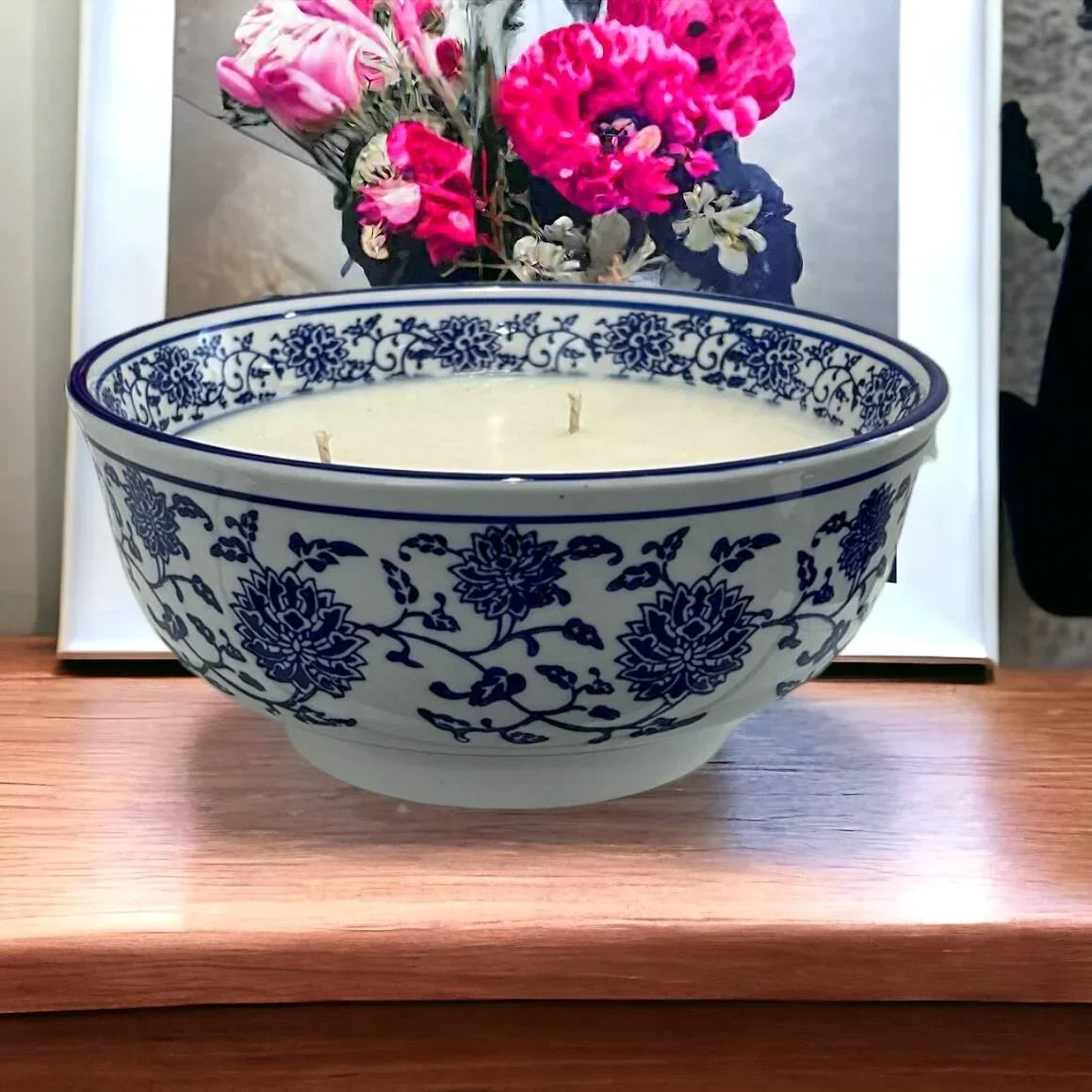
- The Heirloom Collection, $56: the same blend poured into a blue and white bowl designed to outlive the candle.
- Shop all scents
Keep reading
More stories: The Blue and White Bowl, How Long Should You Burn a Candle?, and The Noble Train vs. Evergreen.
Leave a comment
This site is protected by hCaptcha and the hCaptcha Privacy Policy and Terms of Service apply.