


Wheatley, the Poet Behind Our Bestseller
Our bestselling candle is named for a poet who published a book while still enslaved, and who was, at twenty-two, invited to meet George Washington on the strength of her writing.
Boston, 1761
She was taken from West Africa as a child, around seven or eight years old, and arrived in Boston in 1761 aboard a slave ship. She was small, ill, and wrapped in little more than a scrap of carpet. The Wheatley family purchased her and gave her the name she is known by, taken from the ship that carried her.
They also, unusually, educated her. She learned to read English, then Latin. She began composing poetry as a teenager, working by firelight in the parlor of a Boston merchant's home with borrowed ink.
The book
Her work was good enough that people refused to believe it. In 1772 she was examined by a group of Boston's most prominent men, who afterward signed a statement attesting that yes, this young enslaved woman had written the poems herself. That attestation was printed in the front of her book, because no publisher would take it otherwise.
In 1773, Poems on Various Subjects, Religious and Moral was published in London, making her the first African American to publish a book of poetry. She was about twenty years old. Booksellers in two countries carried her work, and readers on both sides of the Atlantic knew her name. She was freed shortly after.
Cambridge, 1776
In late 1775 she sent a poem to George Washington, then commanding the army outside Boston. He wrote back praising her poetic talent and invited her to call on him. In March 1776 she walked into his headquarters at Cambridge and met him.
She was twenty-two years old. She had been enslaved. She had already published a book.
Her later years were hard. She struggled to find a publisher for a second collection, married, lost children, and died in 1784 in poverty at about thirty-one. The second book was never printed and the manuscript has never been found.
The scent
The Wheatley candle is bright on purpose. It opens with orange, orange peel, and grapefruit, warms into mango, peach, and red currant, and settles on cedar.
There is a quality to the light in her poems that is less like candlelight and more like the moment before full summer: expectant, a little overripe, warm through the skin. That is what we reached for. The grapefruit that startles you awake, the mango and orange settled underneath, sweet without being cloying. A whisper of cedar at the base, something rooted, something that holds.
Vibrant, precise, and impossible to ignore, which felt right for a poet whose work traveled farther than anyone expected it to.
Light it at the beginning of something. A warm morning. An open window. Or just light it while you read. That is what it is for.
Two ways to bring it home
- Wheatley Signature Candle, $24. Clear glass, the easiest introduction.
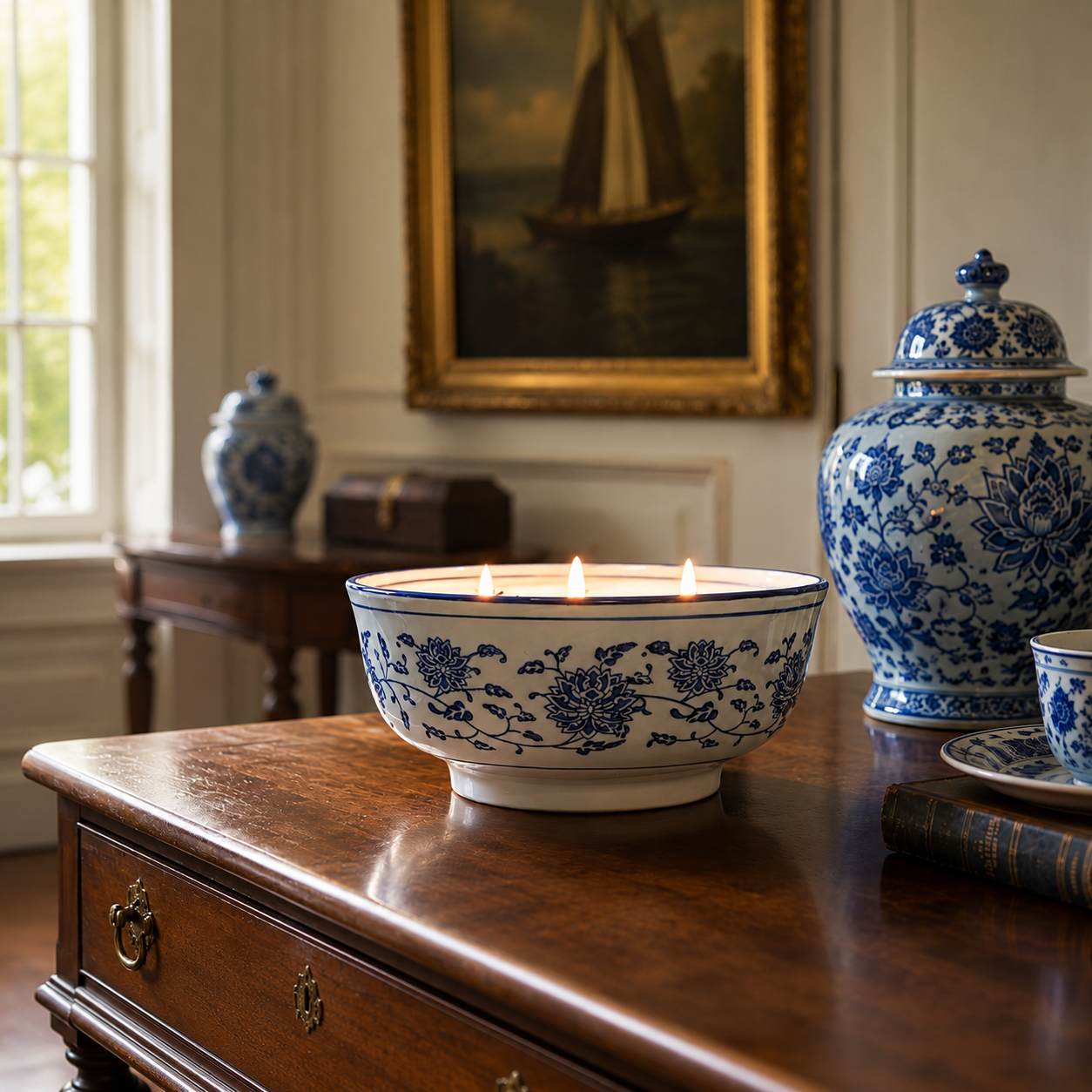
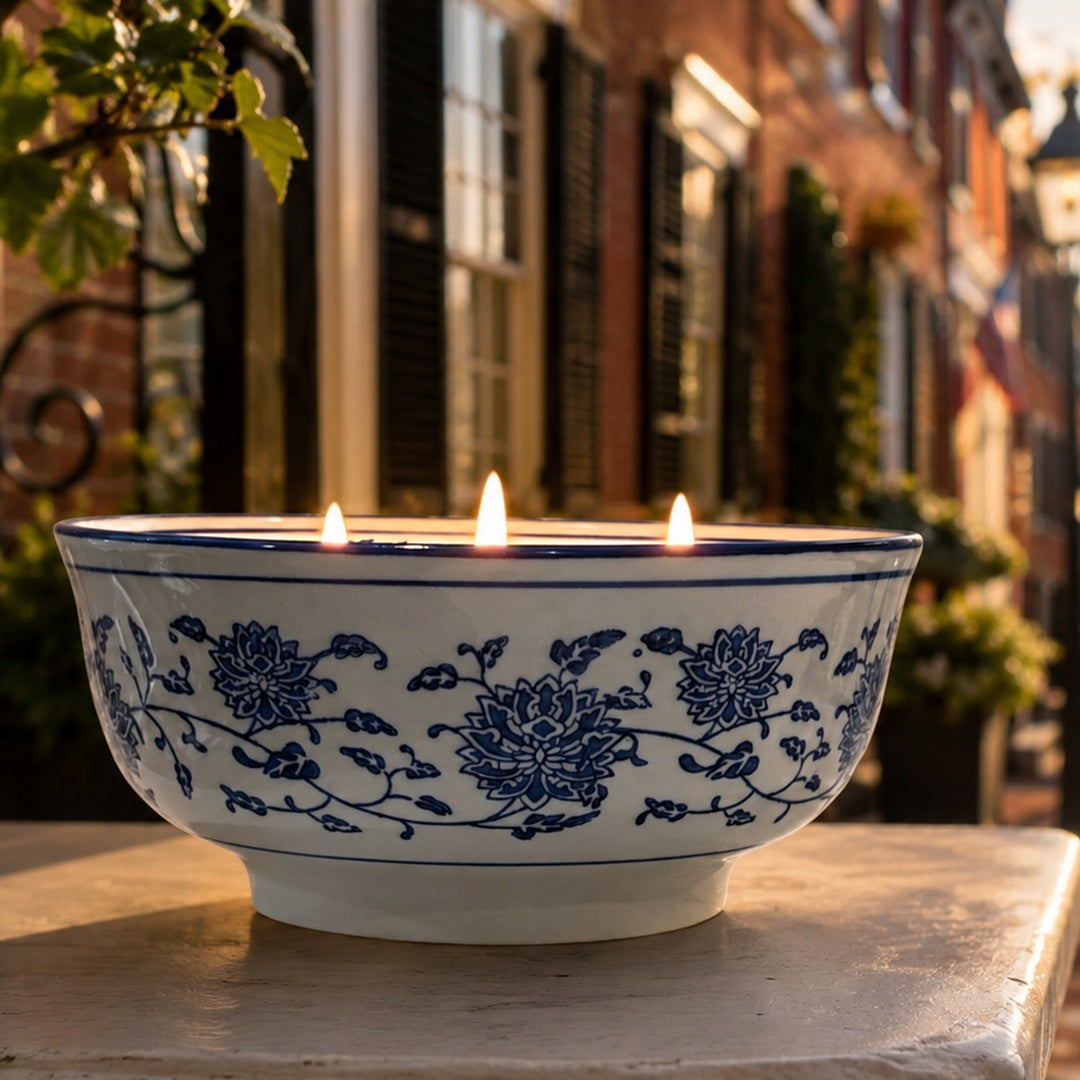
- Wheatley Heirloom Candle, $56. Eighteen ounces poured into our Blue and White Bowl, a vessel meant to be kept, washed, and given a second life on your shelf.
Browse the full Heirloom Collection, the Signature Collection, or shop all scents.
Frequently asked questions
Who was Phillis Wheatley? A poet brought to Boston on a slave ship as a child, and the first African American to publish a book of poetry, in London in 1773.
Did she really meet George Washington? Yes. She sent him a poem in 1775, he replied inviting her to visit, and she met him at his Cambridge headquarters in March 1776.
What does the Wheatley candle smell like? Orange, orange peel, and grapefruit up top, mango, peach, and red currant in the middle, cedar at the base.
Keep reading
More stories: Ona Judge, the Woman Who Said No, Chef Hercules, the Cook Who Chose Freedom, Candles of Old Town Alexandria, and The Blue and White Bowl.

Leave a comment
This site is protected by hCaptcha and the hCaptcha Privacy Policy and Terms of Service apply.