
Candles of Old Town Alexandria
The short answer: Bashford and Pitt started with a walk through Old Town Alexandria. Four of our scents come directly from it. King Street is the city after an evening rain. Apothecary No. 1 honors the botanical shop that opened on Fairfax Street in 1792. Yorktown looks east toward the water. 1783 is named for the year the Revolution formally ended.
If you have taken that walk yourself, you know the feeling. Brick sidewalks uneven underfoot. Rowhouses with shutters painted in colors chosen two centuries ago. Ship masts once crowded the Potomac waterfront here, and the streets still carry the names of that era.
Every candle we pour starts with a question: what did this place smell like? Not in a museum sense, but in a lived one. Rain on cobblestones under lamplight. Herbs hanging to dry in a shop window. Woodsmoke drifting from a kitchen hearth in December. We went deep on that question here: What Did Colonial Alexandria Actually Smell Like?
King Street
King Street captures the city after an evening rain, when the streets glisten and the lamps come on. Rose, lily of the valley, fresh foliage, and sandalwood. It is the scent of the walk home. Also available in the Signature Collection, and we wrote the full story of the street here.
Apothecary No. 1
Apothecary No. 1 honors the botanical shop that opened on Fairfax Street in 1792 and served Alexandria for more than a century. Shelves of dried herbs, pressed botanicals, and clean green preparations. Our version is fresh, herbal, and quietly restorative. Also available in the Signature Collection, with the full story here.
Yorktown
Yorktown looks east toward the water: sea salt, jasmine, and lemon, the fragrance of a Virginia town shaped by its harbor. Also available in the Signature Collection and as a three-wick Hearth Candle. We wrote the full story of the town here: Yorktown, the Town the Sea Decided.
1783
1783 is named for the year the Revolution formally ended, with clove, cardamom, amber, and a hint of smoke. Also available in the Signature Collection, with the full story here.
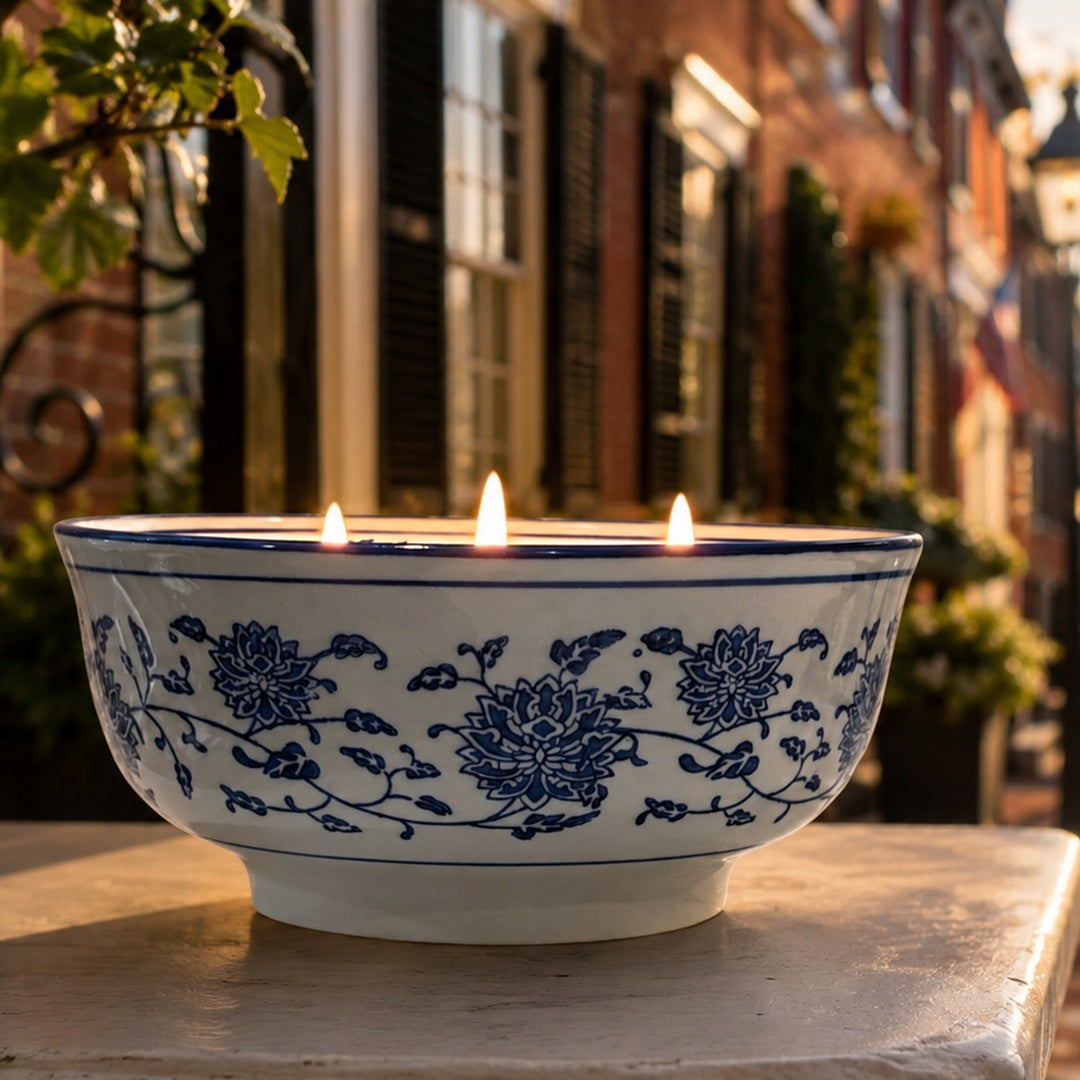
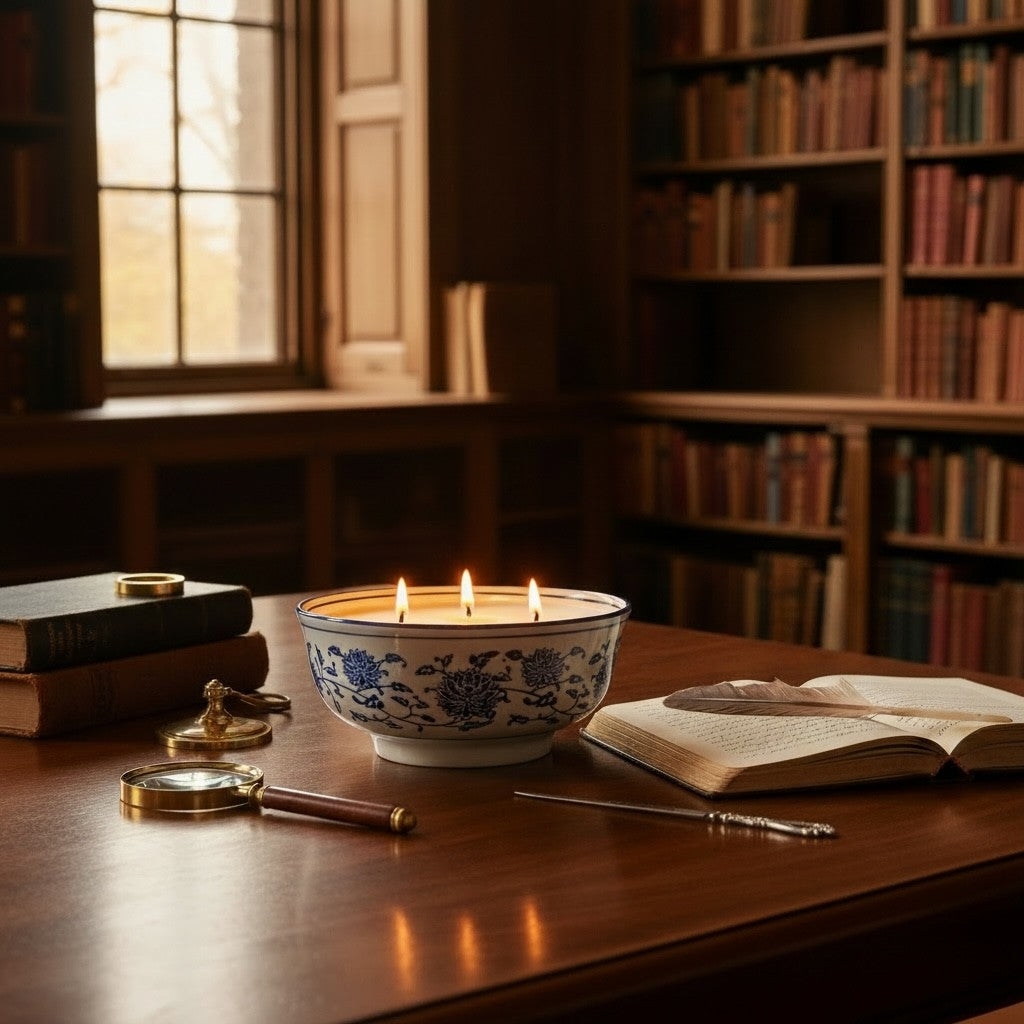
Each candle is hand poured in small batches from a natural soy and coconut wax blend with cotton, lead-free wicks. The Signature Collection comes in glass at eight ounces; the Heirloom Collection is eighteen ounces with three wicks in our Blue and White Bowl, made to stay on your table long after the last burn.
Browse everything in the Heirloom Collection, the Signature Collection, or shop all scents.
Frequently asked questions
Which candle smells most like Old Town Alexandria? King Street. It is built around the city after an evening rain, with rose, lily of the valley, fresh foliage, and sandalwood.
What was the apothecary on Fairfax Street? A botanical shop that opened in 1792 and served Alexandria for more than a century, selling dried herbs, pressed botanicals, and prepared remedies.
What is the difference between the Signature and Heirloom Collections? Signature candles are $24, eight ounces, single wick, in glass. Heirloom candles are $56, eighteen ounces, three wicks, poured into a blue and white bowl designed to be kept after the wax is gone.
Keep reading
More stories: What Did Colonial Alexandria Actually Smell Like?, Yorktown, the Town the Sea Decided, Wheatley, the Poet Behind Our Bestseller, and The Blue and White Bowl.

Leave a comment
This site is protected by hCaptcha and the hCaptcha Privacy Policy and Terms of Service apply.